What Happens at the End of a Commercial Roofing Project?
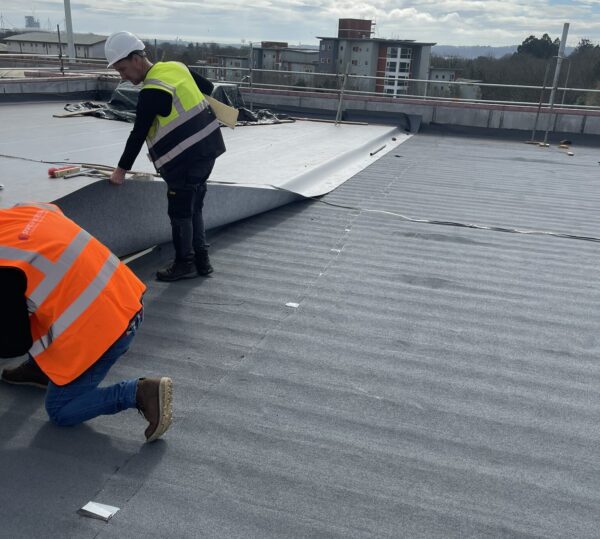
What Documentation should you receive after a roof project?
Completing a commercial roofing project is an important milestone, but the work does not necessarily end when the contractors leave site. For building owners, facility managers and property managers, the handover is an opportunity to confirm that the work has been completed as agreed and that the information needed to manage the roof in the future is in place.
Whether you have commissioned a new roof installation or extensive commercial roof refurbishments, receiving the right documentation can help protect your investment, support ongoing roof maintenance and make future repairs easier to manage.
1.Final roof inspections and confirmation of completed works
Before a roofing project is signed off, the completed work should be reviewed against the agreed specification and scope. The inspection process will depend on the roofing system, the nature of the project and the requirements set out in the contract.
This may include checking membrane finishes, roof edges, flashings, joints, penetrations and drainage details. Where relevant, inspection or testing records should also be provided.
Any outstanding defects or incomplete work should be recorded clearly, with agreed actions and timescales for resolution. This gives the client a clear understanding of what has been completed and whether anything remains to be addressed.
For larger commercial roofing projects, keeping a record of the final roof inspection can also provide a useful reference if questions arise later.
2. Roofing warranties and workmanship guarantees
Warranty documentation is one of the most important elements of a commercial roofing handover. However, not all warranties offer the same protection, so building owners should understand precisely what has been provided.
Depending on the project, there may be separate manufacturer warranties for the roofing system and a workmanship guarantee relating to the installation.
When reviewing these documents, check:
- The duration and start date of the cover.
- What materials, workmanship or defects are covered.
- Any exclusions, limitations or maintenance conditions.
- The process for reporting defects or making a claim.
- Whether any registration or additional documentation is required.
It is also important to understand whether alterations, repairs by other contractors or failure to follow specified maintenance requirements could affect the cover.
Keep warranty documents somewhere accessible alongside the building’s other property records. If the property is sold or transferred to a new managing agent, establish whether the relevant warranties can be transferred and what conditions apply.
3. As-built records and roofing system specifications
The finished roof may differ from the original drawings or specification if changes were agreed during construction. As-built records, where applicable, help document what was actually installed.
These records may include details of the roofing system, insulation, waterproofing layers, junctions and other construction details. Product information should identify the materials used and provide guidance on their appropriate application and compatibility.
This information can be particularly useful when future works are required. For example, if equipment needs to be installed on the roof or a section requires repair, knowing which system is present can help contractors determine the appropriate approach.
For buildings that have undergone significant commercial roof refurbishments, accurate records also help future surveyors understand the construction and assess its condition without relying solely on assumptions.
4. Installation photographs and quality records
Photographs taken during installation can provide valuable evidence of work that becomes concealed once the roof is complete.
Depending on the project, these may show the condition of the substrate, insulation installation, waterproofing details and treatment of vulnerable junctions. Relevant quality-control records and test results can complement this photographic evidence.
These records should not be treated as a substitute for required inspections or formal certification. Instead, they provide additional context about how the work progressed and what was recorded at key stages.
Keeping these documents together with the project specification and handover pack can make future investigations more straightforward, particularly when a leak or other issue develops several years later.
5. Roof Maintenance instructions and future inspections
A newly installed or refurbished roof still requires appropriate maintenance. The handover should therefore explain how the completed system should be looked after and what restrictions apply.
Depending on the roofing system and project requirements, the documentation may cover recommended inspection intervals, drainage maintenance, access arrangements and precautions when carrying out work on the roof.
Building owners should also understand which activities may affect their warranty and whether inspections must be completed by an approved contractor.
A planned roof inspection programme can help identify deterioration, damage or drainage issues before they develop into more significant problems. Maintaining records of inspections, repairs and remedial work also creates a useful history of the roof’s condition.
For properties with multiple buildings, this information can support longer-term maintenance planning and help facilities teams prioritise future expenditure.
6. Outstanding works, sign-off and the handover pack
Before considering the project fully closed, confirm that outstanding items have been documented and that responsibility for completing them is clear.
The final handover pack should contain the relevant records required by the contract and the nature of the works. Depending on the project, this may include:
- Final inspection and testing records, where applicable.
- Roofing system specifications and product information.
- Warranty and guarantee documentation.
- As-built drawings and installation photographs, where available.
- Maintenance instructions and recommended inspection arrangements.
- Records of outstanding defects and their resolution.
Not every project will require every document listed above. The precise requirements depend on the contract, roofing system and applicable project obligations.
It is worth reviewing the documentation before the project is formally closed rather than waiting until a future repair or warranty enquiry makes a missing record difficult to obtain.

Protecting your commercial roof beyond completion
The quality of a commercial roofing project should be considered alongside the information and support provided at handover. A properly organised set of records helps building owners understand what has been installed, maintain the roof appropriately and make better-informed decisions about future work.
For facilities managers and property owners, the handover is also an opportunity to establish a clear maintenance plan and retain the information needed by future contractors or surveyors.
DVC Commercial Roofing Contractors provides commercial flat roofing solutions for buildings with a range of requirements. If you are planning a new installation or refurbishment, understanding the handover process from the outset can help ensure that the finished project is supported by the right documentation for its ongoing management.