
Roof Replacement vs Roof Refurbishment for Public Sector Buildings
 Roof Refurbishment vs Roof Replacement for Public Buildings
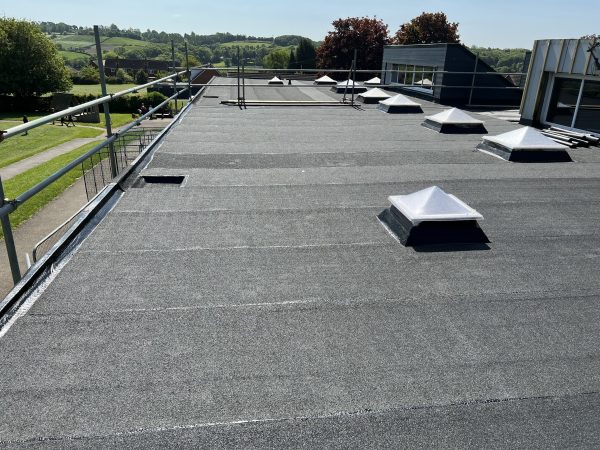 Roof Refurbishment vs Roof Replacement for Public Buildings
For public-sector organisations, managing a portfolio of buildings comes with a constant balancing act. Roofs need to remain safe, watertight and functional, while budgets must be carefully managed and disruption to staff, visitors and service users kept to a minimum.
When a roof begins to deteriorate, one of the biggest decisions for an estates or facilities team is whether to invest in roof refurbishment or proceed with a complete roof replacement.
There is no single answer that works for every building. The right approach depends on the existing roof condition, expected service life, extent of deterioration, building use and the long-term requirements of the property.
Commercial Roof Refurbishment Services
Commercial Roof refurbishment involves improving or renewing an existing roofing system without necessarily removing the entire roof structure.
Depending on the condition of the roof, refurbishment can involve repairing defective areas, renewing waterproofing layers, improving insulation, treating corrosion or applying a suitable coating or overlay system.
For public-sector buildings where the existing roof structure remains fundamentally sound, commercial roof refurbishment services can provide a practical way of extending the life of the roof without the cost and disruption associated with a complete replacement.
Refurbishment can be particularly useful where deterioration is localised rather than widespread. However, the condition of the existing roof needs to be properly understood before a refurbishment solution is selected.
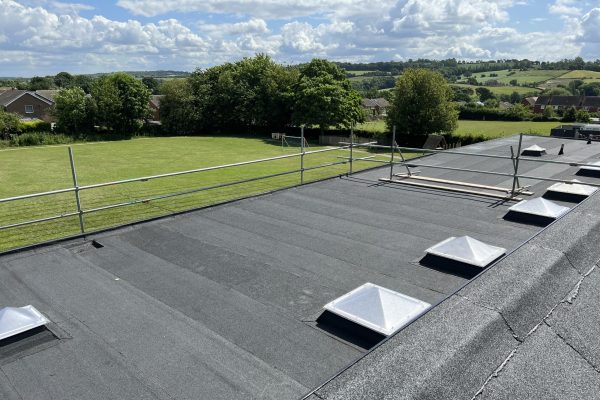
Roof Replacement Services for the Public Sectors
A full roof replacement involves removing the existing roofing system and installing a new system designed to meet the requirements of the building.
Replacement may be appropriate where a roof has reached the end of its expected service life, has extensive water ingress or has suffered deterioration across a significant proportion of its surface.
For public-sector estates, replacement can represent a substantial investment. However, continuing to repair a roof that is approaching the end of its useful life can also create ongoing maintenance costs and uncertainty.
A commercial roof replacement project should therefore be considered as part of a longer-term asset management strategy rather than simply as a response to a serious leak.
Start With a Roof Condition Assessment
Before deciding between refurbishment and replacement, it is important to establish exactly what condition the roof is in. A commercial roof condition assessment can help identify areas of deterioration, defects, moisture ingress and other issues that may not be immediately visible from ground level.
For larger public-sector portfolios, a detailed commercial roof survey can provide estates teams with information that supports planned maintenance and future capital expenditure decisions.
Depending on the roof and building, inspections may incorporate visual assessments, moisture investigation, electronic leak detection or other specialist surveying techniques.
The purpose is not simply to identify whether a roof is leaking. It is to understand the condition of the roofing system as a whole and determine what intervention is likely to provide the most appropriate long-term outcome.
Factors to Consider Before Choosing Refurbishment or Replacement
The Current Condition of the Roof
The overall condition of the existing roof is one of the most important considerations. If the waterproofing system is deteriorating but the underlying roof remains suitable for refurbishment, extending its service life may be possible.
If there are widespread defects, persistent leaks or significant deterioration throughout the system, replacement may need to be considered instead.
Remaining Service Life
Estates teams should consider how much useful life remains in the existing roof. Investing in a series of short-term repairs may appear cost-effective initially, but if the roof is already approaching the end of its serviceable life, a longer-term solution could provide greater value.
Conversely, replacing a roof that could be successfully refurbished may result in unnecessary expenditure.
Whole-Life Cost
The initial project cost should not be the only consideration. Public-sector organisations need to consider the longer-term costs associated with maintenance, future repairs, energy performance, disruption and eventual replacement.
Looking at the whole-life cost of the roofing solution can provide a more useful basis for decision-making than comparing the initial quotations alone.
Disruption to Building Users
Public-sector buildings are often occupied throughout the year and may provide essential services to the community. Schools, healthcare facilities, offices, community buildings and other properties can have strict operational requirements.
A refurbishment project may sometimes allow works to be completed with less disruption than a full replacement, although this will depend on the existing roof and proposed system.
The programme should therefore consider access, working hours, building occupancy and how the works will affect day-to-day operations.
Future Requirements for the Building
The future plans for a building should also influence the decision. If a property is expected to remain in use for many years, investing in a durable roofing solution may make sense.
Estates teams should also consider whether future improvements such as insulation upgrades, renewable technologies or other building works could affect the roofing strategy.
Taking a Planned Approach
For public-sector organisations, the most effective roofing strategy is rarely to wait until a major failure occurs.
Planned roof inspections and condition assessments can help estates teams identify deteriorating roofs before problems become urgent. This creates an opportunity to prioritise work, plan expenditure and reduce the risk of unexpected disruption.
For organisations responsible for multiple properties, information from roof surveys can also help build a longer-term maintenance programme, allowing resources to be directed towards buildings where intervention is most needed.
Partner with DVC Commercial Roofing Contractors
Choosing between refurbishment and replacement is an important decision, but it is only the first stage. The quality of the survey, specification, installation and project management can all influence the long-term performance of the finished roof.
Working with an experienced public sector roofing contractor gives estates and facilities teams access to specialist knowledge when assessing existing roofing systems and planning remedial or replacement works.
At DVC Commercial Roofing, our approach is centred on understanding the condition and requirements of each individual building before recommending an appropriate roofing solution.
If you are responsible for a public-sector property and need to understand whether your roof requires refurbishment or replacement, DVC Roofing can help assess the condition of your existing roofing system and identify the appropriate next steps.