How Poor Drainage Can Affect the Lifespan of Commercial Roofs

Flat Roof Drainage System
A commercial roof is designed to protect your building, equipment, employees and stock from the elements. However, even a high-quality flat roofing system can experience serious problems when water is unable to drain away properly.
Poor drainage is one of the most common causes of premature commercial roof deterioration. When rainwater is allowed to collect on the roof, it can place unnecessary stress on the roofing system, increase the risk of leaks and reduce the overall lifespan of the roof.
For commercial property owners and facilities managers, understanding the connection between commercial roof drainage and roof performance can help prevent expensive repairs and avoidable disruption.
Why Is Commercial Roof Drainage Important?
Commercial roofs are often relatively flat or have a low slope. Unlike pitched residential roofs, they cannot always rely on gravity alone to move rainwater quickly away from the building.
This makes an effective commercial roof drainage system essential.
Depending on the design of the building, drainage may be provided through:
- Internal roof drains
- Gutters and downpipes
- Scuppers
- Outlets
- Falls built into the roof structure
- Emergency overflow systems
When these systems are correctly designed, installed and maintained, rainwater should be directed away from the roof as efficiently as possible.
Problems occur when drains become blocked, outlets are damaged or the roof does not have sufficient falls. Water can then begin to accumulate in low areas, creating what is commonly known as ponding water.
What Is Ponding Water on Roofs?
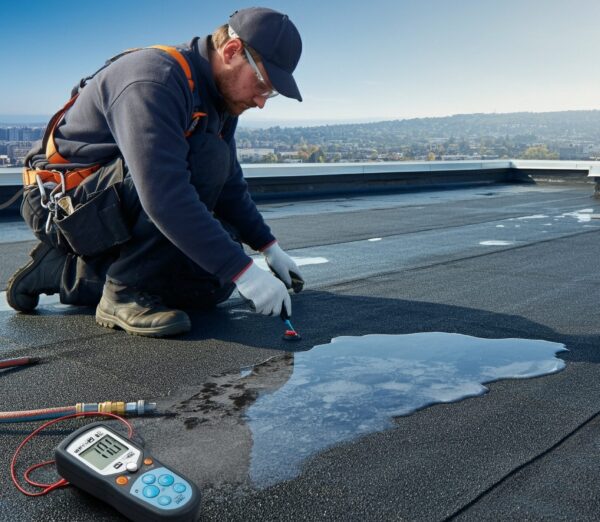
Ponding water refers to water that remains standing on a roof for an extended period after rainfall has stopped. A small amount of temporary water accumulation may occur after particularly heavy rainfall. However, persistent standing water can indicate an underlying commercial roof drainage problem.
Leaves, dirt, moss and other debris can block drainage outlets and prevent water from escaping. Structural movement or deterioration can also create low spots where water naturally collects. Over time, repeated ponding can cause significant damage to the roofing system.
How Poor Drainage Can Reduce Roof Lifespan
One of the biggest concerns associated with inadequate drainage is that it can significantly shorten the lifespan of a commercial roof.
Constant exposure to standing water places additional stress on roofing membranes and other components. Depending on the roofing system, prolonged moisture can contribute to deterioration, weakening and premature failure.
A roof that could otherwise provide many years of reliable service may require repairs or replacement sooner than expected if drainage problems are ignored. This is why commercial roof maintenance should include regular checks of drainage systems and areas where water tends to accumulate.
Increased Risk of Commercial Roof Leaks
Standing water also increases the risk of commercial roof leaks.
Water may eventually find its way through weak points in the roofing system, particularly around:
- Roof penetrations
- Seams and joints
- Flashings
- Drainage outlets
- Roof edges
- Areas where the membrane has deteriorated
A small leak can quickly become a much larger problem if it is not identified and repaired.
Water entering a commercial building can damage ceilings, insulation, electrical systems, stock, machinery and internal finishes. In some situations, it can also disrupt normal business operations.
Addressing drainage issues early can therefore help prevent both roofing damage and costly internal damage.
Poor Drainage Can Damage Roofing Materials
Different commercial roofing systems respond differently to prolonged moisture exposure, but no roofing system benefits from uncontrolled standing water.
Persistent moisture can contribute to the deterioration of roofing materials and may increase the likelihood of issues such as membrane degradation, damaged insulation and deteriorating flashings.
The longer a drainage problem remains unresolved, the greater the opportunity for relatively minor defects to develop into more substantial commercial roofing repairs.
Regular roof inspections can help identify these issues before they become expensive.
The Additional Weight of Standing Water
There is another important consideration: water is heavy. When significant amounts of rainwater accumulate on a commercial roof, the additional weight places increased loading on the roof structure.
This can be particularly concerning if ponding is persistent or widespread. In severe circumstances, excessive water accumulation can contribute to structural problems.
A properly functioning drainage system helps reduce the likelihood of significant water build-up and protects the roof from unnecessary loading.
If you notice substantial ponding or signs of structural movement, it is important to arrange a professional roof inspection rather than simply waiting for the water to disappear.
Blocked Roof Drains Are a Common Problem
One of the simplest causes of poor commercial roof drainage is blocked drainage outlets. Leaves, branches, dirt and other debris can accumulate around drains, particularly on buildings surrounded by trees.
Even a relatively small blockage can restrict water flow and cause water to build up across the roof. Regular commercial roof inspections can help identify blocked drains and other drainage issues before they cause more serious problems.
How frequently the roof should be inspected depends on factors such as the building’s location, roof type, surrounding environment and drainage design.
How to Prevent Commercial Roof Drainage Problems
Prevention is generally more cost-effective than dealing with extensive roof damage after a drainage failure. Building owners and facilities managers should consider incorporating the following into their commercial roof maintenance programme:
Keep Drains and Outlets Clear
Remove leaves, dirt and other debris that could restrict water flow.
Check for Standing Water
After periods of heavy rainfall, look for areas where water remains on the roof. Persistent ponding may require professional investigation.
Inspect Flashings and Seams
Drainage problems can increase the risk of water reaching vulnerable areas of the roof, so these components should be checked regularly.
Arrange Professional Roof Inspections
A professional roofing contractor can identify drainage issues that may not be obvious from ground level.
Address Problems Promptly
Small drainage defects can become significantly more expensive if they are allowed to develop. Prompt commercial roof repairs can help protect the wider roofing system.
Protecting the Long-Term Performance of Your Commercial Roof
Effective drainage is about much more than simply removing rainwater. It is an important part of maintaining the performance, durability and lifespan of a commercial roof.
By keeping drainage systems clear, monitoring areas prone to ponding and arranging regular professional inspections, commercial property owners can reduce the risk of leaks, material deterioration and premature roof replacement.
If your commercial roof regularly experiences standing water after rainfall, it should not be ignored. Persistent ponding could be a sign of blocked drainage, inadequate falls or another underlying issue.
A professional roof inspection can help identify the cause of the problem and recommend the most effective solution. Regular maintenance and timely repairs can help protect your building and prevent minor roofing issues from becoming costly problems.
If you’ve been searching for commercial roof repairs near me or need a reliable commercial roofing company, our experienced team can help. Get in touch today to discuss your roof and find the right solution for your building.