
Ponding Water on a Flat Roof: Causes, Risks & Solutions
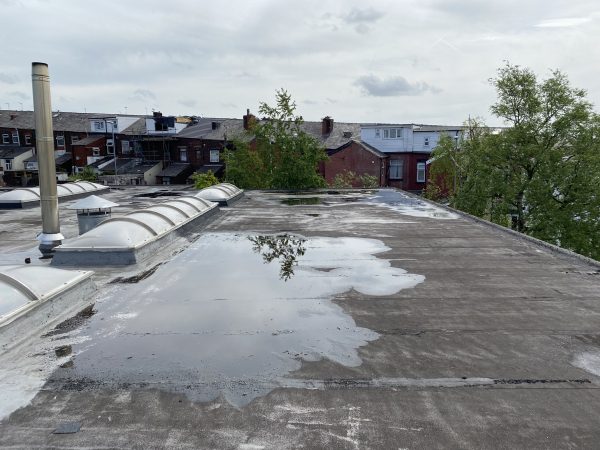
Understanding Ponding Water on Flat Roofs
Ponding water is one of the most common problems affecting flat commercial roofs. After heavy rainfall, it is normal for some water to remain temporarily on a roof. However, if water continues to collect in the same areas for extended periods, it can indicate a drainage or roofing problem that should be investigated.
For property owners and facilities managers, understanding what causes ponding water and how to deal with it can help prevent leaks, roof deterioration and expensive repairs.
In this guide, we explain why water pools on flat roofs, the risks it creates and what you can do to protect your commercial property.
What Is Ponding Water on a Flat Commercial Roof?
Ponding water refers to water that remains on a roof after rainfall rather than draining away effectively.
While flat roofs are designed with drainage systems and slight falls to direct rainwater towards outlets, some standing water may occur after particularly heavy rainfall. The concern is when water remains for prolonged periods or repeatedly collects in the same areas.
Persistent ponding can be a warning sign of problems with the roof’s drainage, membrane, insulation or underlying structure.
A professional commercial roofer like DVC Roofing can assess the roof and determine why water is collecting and whether remedial work is required.
What Causes Water to Pool on Flat Commercial Roof?
There are several reasons why water may accumulate on a commercial flat roof.
Blocked outlets are one of the simplest causes of ponding water. Leaves, dirt, moss and other debris can prevent rainwater from draining away properly.
Regular inspection and cleaning of drainage outlets can significantly reduce the risk of water accumulation.
Poor Roof Falls
Flat roofs are not completely level. They are normally designed with falls that allow rainwater to flow towards drainage points.
If these falls are inadequate, damaged or have changed over time, water may collect in low areas rather than reaching the outlets.
Roof Movement
Structural movement or changes within the roof build-up can create low spots where water naturally gathers.
This can be particularly problematic on older roofing systems where movement, deterioration or previous repair work has affected the original drainage performance.
Damaged Roofing Systems
Deteriorated membranes, damaged insulation and failed roof details can also contribute to drainage problems.
If water is regularly collecting around damaged areas, it is important to establish whether the ponding is the cause of the problem or a symptom of a wider roofing issue.
Why Is Ponding Water a Problem?
Occasional standing water does not necessarily mean that a roof has failed. However, persistent ponding water on a flat roof can increase the risk of several problems.
Roof Membrane Deterioration
Prolonged exposure to standing water can place additional stress on waterproofing membranes. Combined with UV exposure and temperature changes, this can contribute to premature deterioration.
Increased Risk of Leaks
Where membranes, joints or roof details are already damaged, standing water can increase the likelihood of water ingress.
A small defect that might otherwise remain manageable can become a much larger problem if water repeatedly accumulates around it.
Damage to Insulation
If water penetrates the roofing system, insulation can become wet and lose some of its intended performance. Hidden moisture can be difficult to identify without a professional roof survey.
Additional Structural Loading
Water is heavy. Large areas of standing water can add significant weight to a roof structure, particularly if drainage systems are blocked or ineffective.
For this reason, persistent ponding should not simply be ignored.
How Can Ponding Water Be Prevented?
Regular commercial roof maintenance is one of the most effective ways to reduce the risk of ponding.
Property owners and facilities managers should consider:
- Keeping roof outlets and drainage systems clear
- Checking gutters, scuppers and downpipes
- Inspecting membranes for damage
- Monitoring recurring areas of standing water
- Arranging regular roof inspections
- Addressing damaged roof details promptly
- Limiting unnecessary roof traffic
DVC recommends regular commercial roof inspections as part of a proactive maintenance strategy. Routine inspections can identify drainage problems and other defects before they develop into more serious roofing issues.
Can Ponding Water on a Flat Commercial Roof Be Repaired?
In many cases, yes. The correct solution depends on why the water is accumulating.
A commercial roofing contractor may recommend measures such as clearing blocked drainage, repairing damaged membranes or improving individual drainage points.
If inadequate falls are contributing to the problem, more extensive refurbishment may be required. Depending on the condition of the existing roof, this could involve improving the roof build-up or installing a new waterproofing system.
Where the existing roof is reaching the end of its serviceable life, roof contractors may recommend refurbishment or complete replacement rather than continuing with repeated repairs.
The important point is to identify the underlying cause rather than simply removing the water.
When Should You Arrange a Commercial Roof Survey?
If you regularly notice standing water after rainfall, it is worth arranging a professional inspection.
You should consider a commercial roof survey if:
- Water remains on the roof for extended periods
- The same areas repeatedly collect water
- You have noticed new leaks inside the building
- The roof membrane appears damaged
- Drainage outlets frequently become blocked
- The roof is approaching the end of its expected service life
- Previous repairs have failed
A survey can help establish the condition of the roofing system and provide a clearer understanding of whether maintenance, repair, refurbishment or replacement is required.
Protect Your Commercial Flat Roof
Ponding water should not automatically be treated as an emergency, but persistent standing water is something commercial property owners should take seriously.
Regular maintenance, effective drainage and professional inspections can help identify problems early and extend the life of a roofing system.
If you are experiencing recurring ponding water, leaks or drainage problems, DVC Roofing can assess your roof and recommend an appropriate solution. Our commercial roofing services cover roof inspections, maintenance, repairs, refurbishment and replacement for properties across the UK.
Whether you need advice from an experienced commercial roofer or are planning a larger roofing project, early action can help protect your building and reduce the risk of costly damage.