
Flat Roof Solutions for Automotive Manufacturers: Preventing Downtime and Ensuring Safety

Flat Roofing Systems
For automotive manufacturers, every second of production counts. Downtime caused by roof issues can lead to costly delays, impacting supply chains and profitability. That’s why partnering with trusted commercial roofing contractors is essential. A durable commercial flat roof protects your facility, employees, and production processes while reducing the risk of unplanned downtime.
In this article, we explore the benefits of flat roofs for automotive manufacturers, the risks of poor maintenance, and how professional commercial roofing contractors can help prevent costly disruptions.
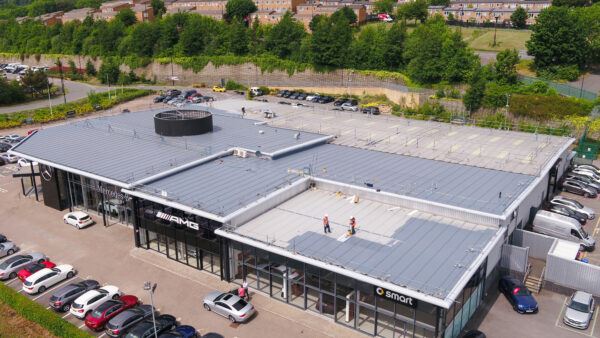

Benefits of using Flat Roofs for Automotive Manufacturers
Most automotive manufacturing facilities are built with commercial flat roofs because of their practicality, cost-effectiveness and ability to accommodate large-scale industrial operations. Here’s why they’re the best choice:
- Space Optimisation – Flat roofs provide additional space for HVAC systems, solar panels, and ventilation units without taking up valuable ground space.
- Cost-Effective Construction – Compared to a pitched roof, a flat roof requires fewer materials and is quicker to install, making it a cost-effective solution for large factories.
- Easy to Maintain – Regular inspections and repairs are easier on a flat surface, reducing long-term maintenance costs.
- Energy Efficiency – With the right materials, a flat roof improves insulation and reduces energy consumption, lowering overall operating costs.
The Risks of a Poorly Maintained Flat Roof
Ignoring flat roof issues can result in significant consequences for automotive manufacturing facilities. Building owners are suggested to seek advice from reliable roofing companies. Experienced commercial flat roof contractors can help prevent these risks:
- Water Leaks & Structural Damage
- Flat roofs are prone to water pooling, leading to leaks that can damage machinery, disrupt production, and create safety hazards.
- Energy Loss & Increased Costs
- Poor insulation can cause heat loss in winter and excessive heat retention in summer, driving up energy bills and affecting indoor working conditions.
- Compliance & Safety Risks
- A deteriorating roof may not meet building regulations, putting your facility at risk of fines or operational shutdowns.
- Unplanned Downtime
- Roof failures can halt production lines, cause financial losses and miss delivery deadlines.
How Professional Roofing Companies Help Prevent Downtime
- Expert Installation & Upgrades
- High-performance commercial flat roof installations designed to withstand harsh weather, heavy equipment loads, and daily industrial demands.
- Regular Inspections & Maintenance
- Scheduled roof inspections by professional roofing companies help identify minor issues before they become major disruptions.
- Emergency Repairs
- Quick response times and efficient repair solutions minimise the risk of downtime.
- Durable Materials
- A professional roofing contractor works with top-grade waterproofing and insulation systems to extend the life of your roof.
- Energy-Saving Solutions
- Energy-efficient roofing options help reduce operating costs while keeping your facility at optimal temperatures.
Related Article: Roofing Companies’ Solutions for Automotive Manufacturers
Commercial Flat Roofing Newcastle Mercedes Garage SIKA Liquid Plastics
Looking for Retail Roofing Contractors?
We have over 30 years of experience in roofing for retailers and chain stores. Learn more about our retail roofing services to keep your commercial property safe for your customers.
Q&A: Commercial Flat Roofing Systems
Q1: What services do commercial flat roofing contractors provide?
A: Commercial flat roofing contractors handle a wide range of services, including commercial flat roof installation, roof repairs, maintenance services, roof surveys, and roof waterproofing. They specialise in durable roofing solutions for industrial, retail, and automotive facilities, ensuring minimal downtime and long-lasting performance.
Q2: How can I check the condition of my flat roof?
A: A flat roof condition survey or flat roof surveys conducted by professional roofing contractors can identify leaks, insulation issues, and structural weaknesses. Regular inspections help prevent costly repairs and unplanned downtime.
Q3: What types of commercial flat roof services are available?
A: Services include:
Commercial flat roof installation for new builds or replacements.
Commercial roof maintenance services to extend roof life.
Commercial roof inspection services to identify issues early.
Commercial flat roof waterproofing contractors for protection against water damage.
Commercial roofing replacement services when repairs are no longer sufficient.
Q4: How often should a flat roof be inspected?
A: Professional commercial roofing contractors typically recommend regular flat roof condition surveys, at least twice a year, or after severe weather, to maintain roof integrity and avoid unplanned downtime.
Q5: What is included in a commercial roof inspection?
A: A commercial roof inspection may include:
- Assessment of roof membranes and waterproofing.
- Checking for water pooling or leaks.
- Evaluating insulation and energy efficiency.
- Identifying any compliance or safety risks.
Q6: How do I find reliable commercial flat roofing contractors?
A: Look for contractors specialising in commercial flat roof installation, flat roof repair, and commercial roof maintenance services. Experience with industrial facilities and a track record of emergency repairs or roofing refurbishments are strong indicators of reliability.
Q7: What are common issues with flat roofs?
A: Common flat roof problems include water leaks, insulation failure, roof membrane damage, and structural deterioration. Professional flat roof specialists can address these issues through emergency roof repair or routine commercial roof maintenance.
Q8: Can flat roofs support energy-saving solutions?
A: Yes. Many commercial flat roofing contractors provide energy-efficient flat roof options including insulation upgrades and the installation of solar panels. This reduces operational costs while maintaining compliance with energy standards.